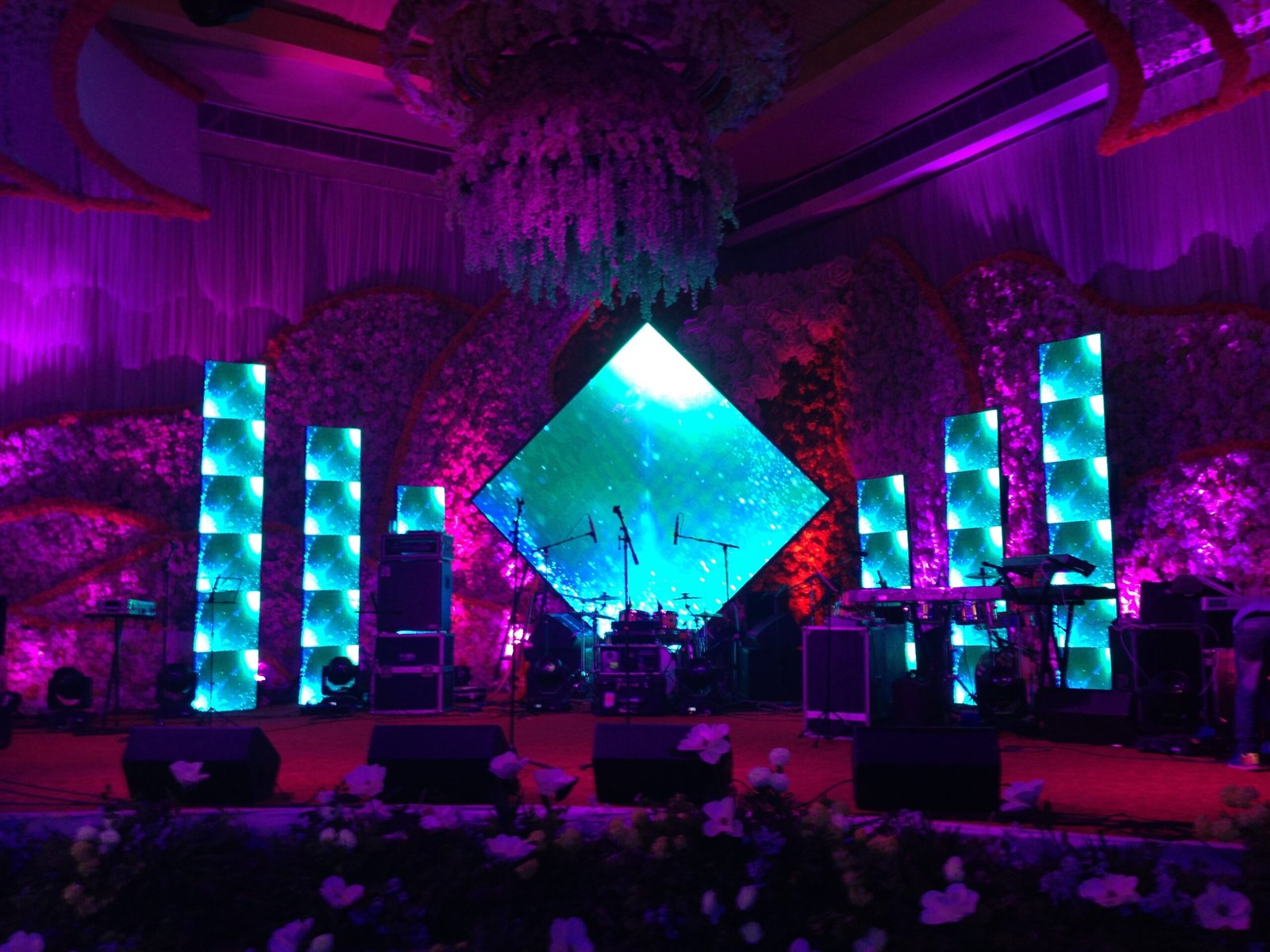
FOR EVENT PLANNERS & AGENCIES
One room. Many moving parts.
A concise checklist for coordinating DJ music, live visuals, cueing, rehearsals and production handovers.
A corporate event can have a strong DJ set, attractive screen content and a detailed agenda—and still feel disconnected if the live cues are unclear. The problem is rarely the number of creative elements. It is how music, visuals, microphones, speakers, content playback and transitions are coordinated in real time.
This checklist is for corporate organisers, agencies and technical producers preparing conferences, awards evenings, brand events, networking receptions or celebrations. N1EL’s practice covers DJ performance, visual/VJ work and show running. These are separately scoped roles, not a promise of equipment rental or an in-house technical crew in every destination.
1. Identify what music must accomplish
Start by naming the purpose of each part of the agenda: arrivals, pre-function, room opening, speaker walk-ons, breaks, recognition, networking and any after-party. Choose the energy and volume range for each moment before assigning individual songs. Reception music should support conversation. An awards entrance might need a precise edit and a visible cue. A dance-floor set calls for audience-aware pacing rather than a fixed running order.
If multiple nationalities or age groups are attending, share the audience mix and any brand or cultural constraints. Indian, Bollywood, Punjabi and international cross-cultural music can be considered where relevant to the room; no style should be assumed solely from the host organisation’s location.
2. Separate the DJ, VJ and show-calling responsibilities
A DJ handles music selection, transitions and performance playback within the agreed brief. A visual artist or VJ handles appropriate visual sequencing and live screen treatments. The show caller or stage manager manages the sequence of show cues, communication and escalation. One person may have experience across these disciplines, but that does not make all roles interchangeable during a complex show.
For each cue, identify a single accountable operator and an escalation contact. If N1EL is engaged in more than one capacity, confirm whether the schedule genuinely allows it or whether dedicated local crew is needed.
3. Build a cue sheet that production can actually use
Each line should include a cue identifier, estimated time, trigger, lead person, required media, destination device, operator and fallback. “Play the video at 7:30” is weaker than “On stage manager’s GO after the host confirms the award category: roll approved clip V03 with room audio; lighting state L12; return to host mic at end slate.” Use the venue’s preferred cue-sheet format.
Speaker walk-on
Prepare: approved music edit, duration and microphone handover.
Confirm: show caller and audio operator.
Brand film
Prepare: correct edit, sound level and screen format.
Confirm: playback, video and audio operators.
Awards handover
Prepare: winner list, music sting and lighting transition.
Confirm: show caller, stage and lighting teams.
After-party
Prepare: DJ start cue, music brief and curfew.
Confirm: event lead, venue and DJ.
4. Lock media versions and technical handovers
Agree a deadline for the final version of presentations, visual loops, videos, opening stings and walk-on tracks. Give each approved file a clear version and cue number. Keep a list of audio formats, video codec and resolution requirements, aspect ratios, playback machines and who supplies backup files. Playback transitions should be rehearsed on the actual show system, not only on a laptop in an office.
Check whether microphones and walk-on music use separate audio channels, and who has control of the main PA level. Confirm if lighting changes are called by the stage manager or triggered by a media operator. When visual content is optional, simpler can be better: avoid adding screens or animated cues that distract from speakers.
5. Protect rehearsal and contingency time
Run cue-to-cue rehearsals for sensitive transitions. Test the host’s entrance, top executive presentations, special guest segments, recognition moments and the return to networking music. A sensible rehearsal plan specifies which participants must attend, the technical team needed, and what happens if a speaker, file or cue changes.
Prepare a fallback for each high-impact moment: replacement playback media, microphone failure, late speaker arrival, programme overrun and an early venue curfew. The event lead should know who can authorise a change in the moment.
6. Scope international delivery without assuming local presence
For a cross-border brief, identify the venue, city, local production company, performance or consulting scope, work-permit requirements where applicable, insurance responsibilities, travel and accommodation arrangements, and invoice currency before booking. Technical supply and venue permits should be agreed explicitly; a travelling performer should not be assumed to arrive with complete AV, staging and crew.
N1EL is based in Delhi, with professional experience in India and the UAE, and considers selected international briefs subject to availability, travel, permissions and agreed scope. This is not a claim of permanent representation or local staffing in every market.
7. What to include in an initial corporate-event brief
- Event format, venue/city, date and time window (even if tentative).
- Guest profile and what the audience should feel at each segment.
- Which role is required: DJ, visual/VJ work, show running or creative consultation.
- Draft running order, high-impact cues and expected rehearsals.
- Existing production and AV partners, with clear equipment ownership.
- Available media, content version owner and approval deadline.
- Travel, local permissions, contracting and any budget boundaries.
Not every detail has to be final. Distinguishing what is known from what remains open is enough to begin a productive conversation.
Where N1EL can fit
Explore the selected work archive for evidence of the music, visual and live-execution practice. The services overview describes each scope independently. If the requirement is a single DJ set, a cueing consultation or a more integrated creative role, use the project enquiry form to describe it. The initial form asks only for name, email and mobile/WhatsApp as required contact details; location, timing and brief remain optional but helpful for international planning.